
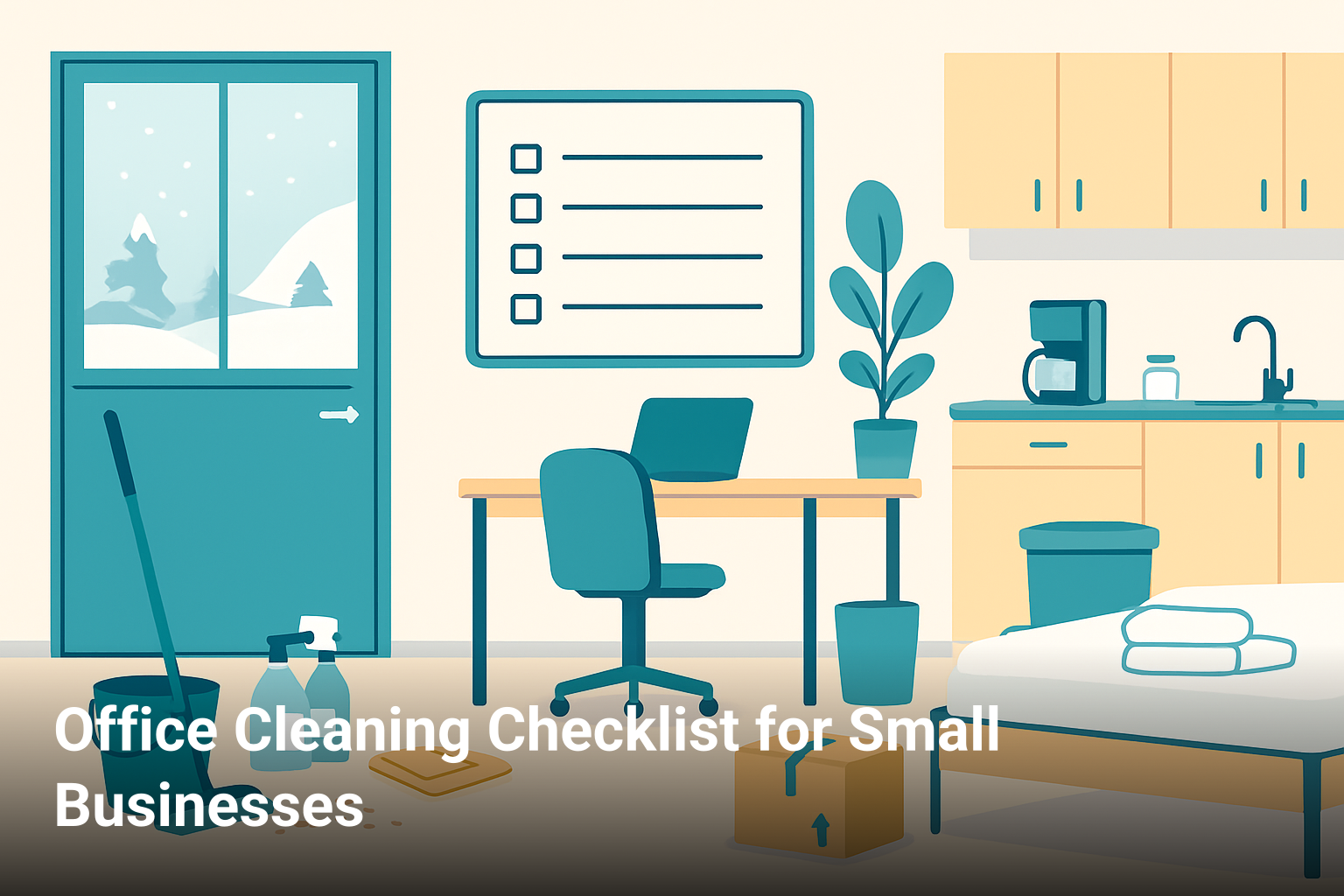
A useful office cleaning checklist for small businesses separates daily, weekly and occasional tasks, then assigns responsibility for shared areas such as kitchens, toilets, desks and entrances. If you would rather arrange the work, H-Chuks cleaning services in Oulu provides regular or one-time office cleaning, with estimated hours given before the job starts.
What should an office cleaning checklist include?
A small-business office cleaning checklist should cover high-touch surfaces, floors, toilets, kitchen areas, waste points and shared equipment. It should also say how often each task is done and who checks that the task is complete, rather than leaving cleaning as an informal reminder.
Start by walking through the workplace as a visitor would. For example, an office in a converted flat may have a narrow entrance, a shared kitchenette and one bathroom, while a shop, salon or small studio may need more attention around the customer entrance and service areas. Include the tasks that fit your premises, not every possible cleaning job.
Keep special areas visible on the list. In Oulu, snow, grit and sand can be carried indoors during winter, so entrance floors may need attention more often than a quiet meeting room. If the workplace has a sauna, balcony or stairs, list those separately so they are not forgotten during a deeper clean.
Daily office cleaning checklist for the working day
Daily cleaning should focus on dirt, waste and frequently touched surfaces that can build up during normal office use. A small office cleaning routine can be completed at opening, closing or another agreed time, provided the timing does not interrupt staff or customers.
- Empty indoor bins when they are full or contain food waste, and replace liners where needed.
- Wipe commonly touched points such as door handles, light switches and shared appliance handles.
- Clean kitchen worktops, the sink area and the outside of appliances after use; follow each product label and never mix cleaning chemicals.
- Check toilets, replenish the supplies your workplace provides, and clean the sink, toilet surfaces and floor as needed.
- Remove visible dirt from entrance areas and vacuum or mop floors according to the surface and the level of use.
- Leave desks and personal work materials in place unless the person responsible has cleared the area for cleaning.
For example, a five-person office may only need a short daily check of one kitchen and one toilet, while a customer-facing premises may need entrance and waiting areas checked several times during the day. The checklist should describe the standard required without assuming that every room needs identical attention.
Which office cleaning tasks belong on a weekly or monthly list?
Weekly tasks usually cover areas that need more time than a daily tidy, while monthly or occasional tasks address less visible dust and buildup. The correct frequency depends on foot traffic, the number of people using the space and whether food, customers or outdoor dirt are brought inside.
Weekly office cleaning tasks can include vacuuming edges and corners, cleaning skirting boards where needed, wiping cupboard fronts, dusting reachable surfaces, and cleaning meeting-room tables and chairs. Check the area behind bins, under easily movable furniture and around entrance mats because these places can collect grit.
Less frequent work may include cleaning interior windows, frames and sills, wiping doors more thoroughly, cleaning vents from the outside where safe, and reviewing storage or kitchenette areas. Window cleaning needs its own timing; for guidance on planning it, see how often to clean windows. Do not climb unstable furniture or attempt high exterior work without suitable safe access.
Imagine a small office that is quiet in summer but receives muddy footwear in winter. Its manager might schedule floor edges and entrance details more often during the colder months, then review the checklist when the pattern of use changes.
How can a small business organise responsibility for cleaning?
Assigning each task to a named person or cleaning service makes an office checklist more useful than a list pinned to a wall. Decide whether employees are only responsible for leaving personal desks and kitchen items ready, or whether they are also expected to complete shared cleaning.
Keep the checklist short enough to use. A simple table can have four columns: area, task, frequency and responsible person. Add a notes column for issues such as a blocked sink, a damaged bin or a supply that needs replacing. Do not record sensitive customer or employee information on a general cleaning sheet.
Common mistakes include cleaning around objects instead of clearing a surface first, forgetting handles and switches, using too much product, and treating a visibly tidy room as a clean room. Follow product labels, use suitable care instructions for surfaces, and never combine chemicals. If a surface, appliance or flooring material has special instructions, check those instructions before cleaning.
If the workplace is shared with other businesses or located in a housing-company building, confirm which areas are included in your own responsibility. A cleaning arrangement may need to distinguish your office from shared entrances, stairwells or toilets.
When should a small business arrange professional office cleaning?
Professional office cleaning can be useful when staff cannot clean consistently, the premises have several shared areas, or the business needs regular help alongside its own daily tidying. H-Chuks Cleaning Service serves offices and commercial premises in Oulu and the surrounding area, with regular or one-time cleaning and communication in English or Finnish.
When requesting a quote, describe the approximate size, number of rooms, toilets and kitchen areas, floor types, entrance conditions, preferred frequency and any unusual spaces. Mention whether you need office cleaning only or also another listed service, such as window cleaning. Current rates are listed on the cleaning services page; rates are charged per hour, and the estimated hours are provided before work starts.
For example, a small team might keep desks clear and report spills while arranging a regular service for floors, toilets and the kitchenette. A business preparing for a one-off change in premises might instead ask about a single cleaning visit. The checklist still helps in both cases because it explains what the workplace needs.
To discuss your premises, request a free quote from H-Chuks Cleaning Service in Oulu; the company replies the same day with a rate, an estimate of the hours and the dates it has free.
Frequently asked questions
How often should a small office be cleaned?
Daily checks are suitable for waste, kitchen areas, toilets, high-touch points and visible floor dirt. Weekly or less frequent tasks can cover edges, furniture details, cupboards and interior windows, depending on how the workplace is used.
Should employees clean their own desks?
Employees can usually keep personal papers and belongings organised so surfaces are accessible. The business should clearly decide who handles shared areas and what a cleaning service or responsible person is expected to clean.
What should be included in an office cleaning checklist?
Include entrances, floors, desks or work surfaces, shared equipment, kitchens, toilets, bins and high-touch points. Add less frequent tasks such as edges, doors, cupboards and windows when they apply to the premises.
Can an office cleaning service follow a small-business checklist?
Yes, a checklist helps explain the areas and tasks your business needs. Share the approximate size, rooms, frequency and any special areas when requesting an estimate of the hours.